

Most Home WiFi Problems Aren’t About Internet Speed
Most WiFi problems in homes are not caused by slow internet service. They are caused by networks that were never designed as a single system.
Over time, many homes accumulate a router from the internet provider, a WiFi extender added to fix a weak signal, and another access point installed later for a garage, guest house, or backyard. Each addition solves one problem in isolation, but none of it works together.
On the surface, the network appears functional. In practice, devices bounce between signals, video calls freeze, smart systems disconnect, and coverage drops in the places that matter most. This is not a speed problem. It is a design problem.
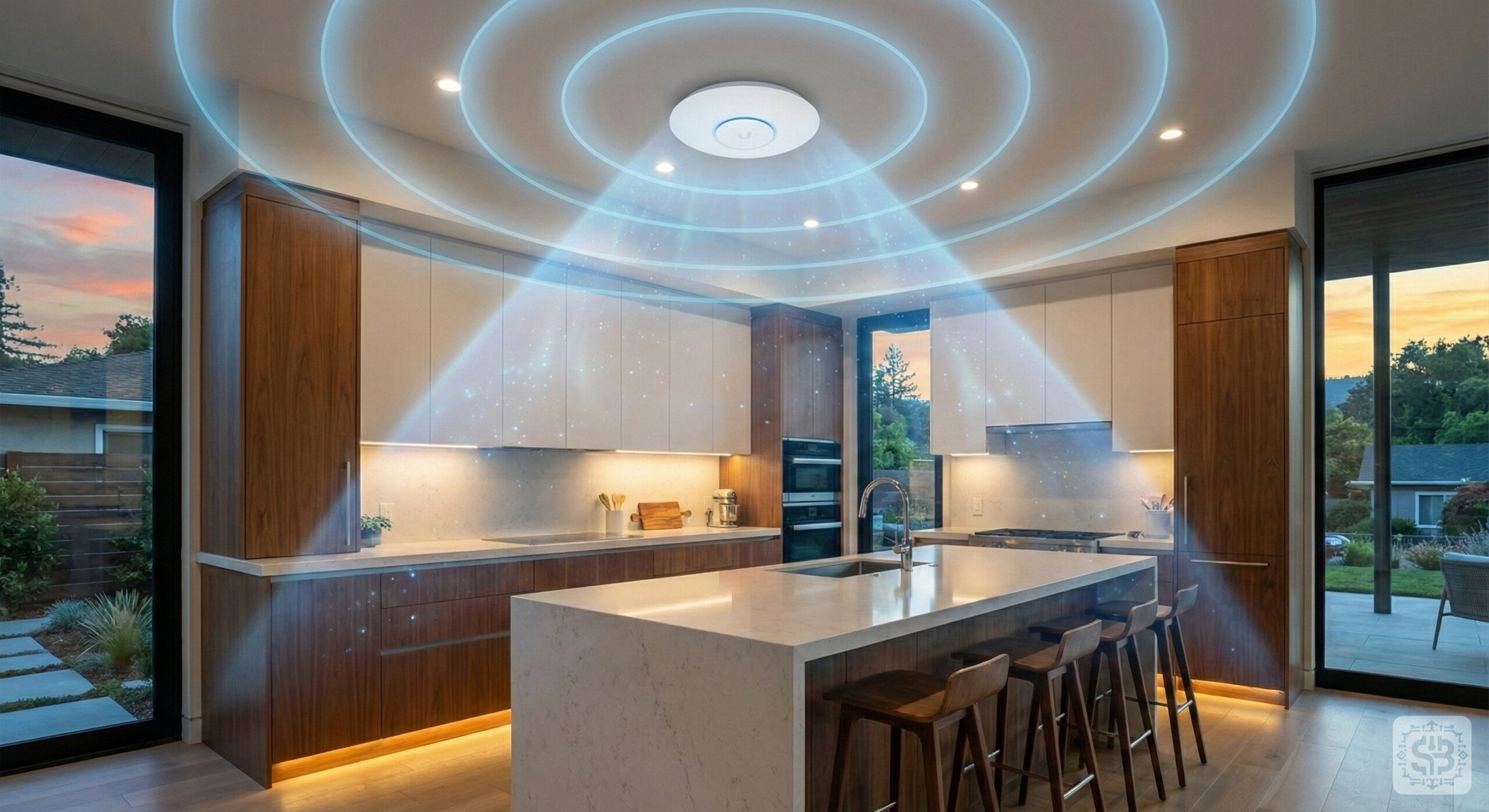
The Problem: Patchwork WiFi
Modern homes place serious demands on their networks. Security cameras, smart lighting, home automation, streaming media, remote work, and outdoor connectivity all depend on stable, predictable WiFi.
When these systems are supported by mismatched or unmanaged equipment, reliability breaks down. Common symptoms include multiple WiFi names throughout the property, dead zones indoors or outdoors, smart devices that randomly going offline, frequent resets, and no clear visibility into what the network is actually doing.
Adding more extenders or consumer mesh devices often makes these issues worse, not better. They increase complexity without addressing the underlying design.
The Real Cause: No Network Design
Most residential networks grow without a plan. Equipment is added one piece at a time to solve immediate problems, not as part of an overall architecture.
Over time, the network becomes fragmented, harder to manage, and less secure. This is why WiFi may work “most of the time,” but rarely works consistently.

The Solution: One Designed Network
At Santa Barbara IT Group, residential WiFi is designed as a single, unified system. The goal is one secure network that covers the entire property and works seamlessly everywhere it is needed.
We build whole-property networks using professional-grade infrastructure. Access points are placed intentionally based on the layout of the home, construction materials, and how each space is actually used. Devices connect to one secure WiFi network and move smoothly from room to room, and from indoors to outdoors, without dropping or reconnecting.
Network traffic is segmented thoughtfully to protect core systems, smart devices, cameras, and guests. Performance and reliability are monitored continuously so issues can be addressed before they disrupt daily life.
How We Start: Network Site Assessment
Every project begins with a Network Site Assessment. This allows us to evaluate existing equipment, identify coverage gaps, validate physical wiring infrastructure, assess security risks, and plan for future expansion.
From this assessment, we deliver a clear, practical plan outlining what should be corrected, what should be replaced, and how to build a network that will remain reliable and resilient, long-term.

The Outcome: WiFi You Don’t Think About
A properly designed residential network should feel invisible. There are no dead zones, no constant resets, and no guessing which WiFi to join. Phones, laptops, televisions, cameras, and smart systems simply stay connected.
If your home has multiple WiFi names, unreliable smart devices, or inconsistent coverage, the solution is not more hardware. It is Santa Barbara IT Group, designing your network correctly from the start.
Reach out today to discuss how we can help you move your property into the 21st century with seamless, end-to-end, rock-solid WiFi.
Santa Barbara IT Group
Residential Managed Networks · Security First